NASA Is Using WordPress to Publish Photos from Lunar Orbit
On April 3, 2026, two days after NASA’s Artemis II lifted off from Kennedy Space Center’s Launch Complex 39B, Commander Reid Wiseman pointed a camera out the window of the Orion spacecraft and captured Earth hanging in the dark. Those photos are now publicly available at nasa.gov/gallery/journey-to-the-moon, served from a WordPress media library, via URLs beginning with nasa.gov/wp-content/uploads/.
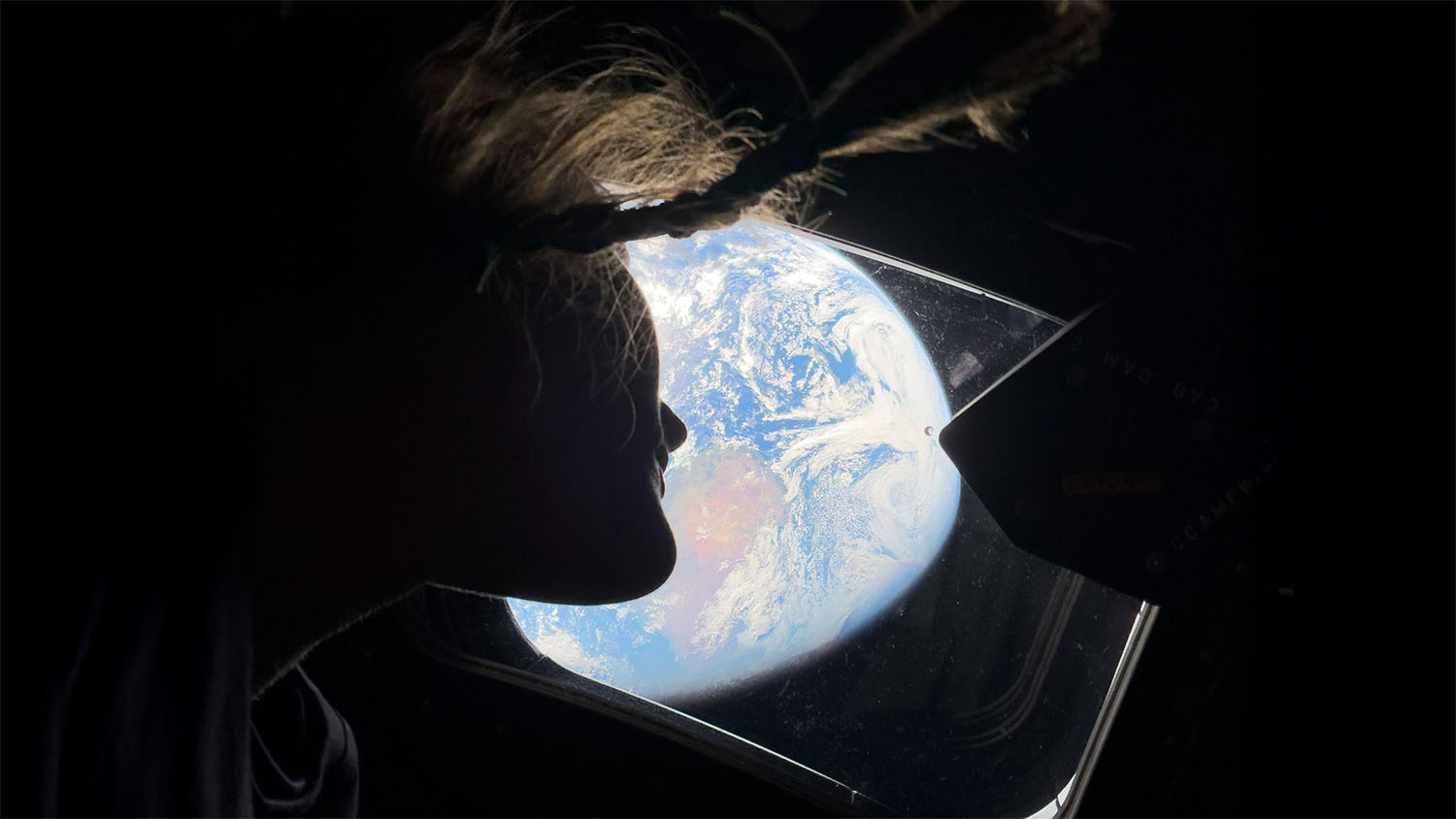
The above image – NASA astronaut and Artemis II mission specialist Christina Koch peering out of one of the Orion spacecraft’s main cabin windows, looking back at Earth, as the crew travels towards the Moon – was posted on NASA’s custom WordPress website.
Not a detail that tends to make headlines, but it should be brought to the attention of any non-technical person who wants their very own – non social media – website to post on.
The Mission
Artemis II launched April 1, 2026, carrying NASA astronauts Reid Wiseman, Victor Glover, and Christina Koch, along with Canadian Space Agency astronaut Jeremy Hansen, on the first crewed mission beyond low Earth orbit since Apollo 17 in December 1972. The crew is expected to travel a total of 695,081 miles from launch to splashdown, passing within 4,070 miles of the lunar surface during closest approach. At its furthest point, the mission breaks the record for the farthest distance humans have traveled from Earth, a mark previously held by Apollo 13.
Live coverage of the lunar flyby has streamed across NASA+, Amazon Prime, Apple TV, Hulu, Netflix, HBO Max, and Roku. The mission’s photo gallery, however, is quietly publishing to the same place NASA publishes everything else: a self-hosted WordPress installation.
How NASA Ended Up on WordPress
NASA migrated nasa.gov from Drupal to WordPress following an 18-month active development and migration effort. The project migrated 68,698 pages, created 3,023 new landing pages, and brought 456 CMS users onto the platform. Site infrastructure moved from Amazon Web Services to WordPress VIP, a managed hosting platform for the open-source WordPress software.
The selection was competitive. NASA evaluated both proprietary and open-source solutions, examining more than a hundred CMS platforms before narrowing to four finalists: two commercial, two open source, with WordPress and Drupal among them. The team built prototypes and gathered user feedback across all four before making a final call.
The deciding factors were practical. The scale of the WordPress community meant NASA could find support without being locked into a single vendor, a flexibility that commercial CMS solutions consistently failed to offer. The plugin ecosystem provided real-time SEO and accessibility analysis directly inside the authoring environment, allowing content creators to evaluate work before it was ever published. The WordPress REST API also played a central role, synchronizing content between the flagship nasa.gov and science.nasa.gov, and serving as the data layer for NASA’s iOS and Android applications.
The Software Runs on Your Own Server
WordPress is open-source software. It runs on whatever infrastructure the operator chooses, from a shared hosting account to a cluster of dedicated servers, and that flexibility is a meaningful part of why organizations from solo bloggers to federal agencies end up on it. There is no platform lock-in in the way there would be with a proprietary CMS. The code, the content, and the database all live wherever the operator puts them.
For anyone looking to publish content on a website they control, the WordPress software is a solid foundation. It handles a personal blog just as well as it handles a federal agency with tens of millions of monthly visitors. The underlying platform scales well beyond what most projects will ever need, and the ecosystem around it means there is usually a straightforward path to whatever comes next, whether that is a REST API feeding a mobile app, a headless frontend, or simply a new page type.
NASA’s build is an unusually complex implementation. It involved custom Gutenberg blocks, enterprise hosting infrastructure, federal accessibility compliance requirements, and integrations with multiple internal systems. Most projects will never come close to that level of complexity, and WordPress handled it without issue. The ceiling is higher than many assume.
According to publicly available traffic data, nasa.gov attracts approximately 30 million unique visitors per month and around 120 million page views. That traffic does not arrive on a predictable schedule. Launch days and major mission events produce sudden, massive spikes, exactly the conditions under which infrastructure tends to fail. WordPress held up fine.
The Artemis II gallery puts it in concrete terms. Crew members aboard the Orion spacecraft, named Integrity by the crew, are capturing images hundreds of thousands of miles from Earth and publishing them to the same kind of WordPress media library that powers countless other sites. The scale is different. The platform is not.